What Is NDIS Software and How Does It Help Providers?
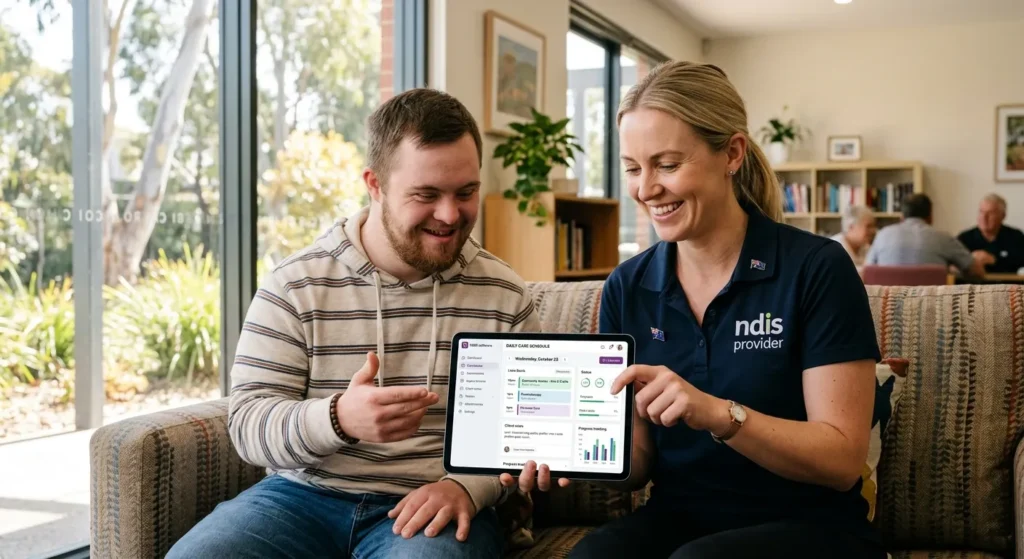
The National Disability Insurance Scheme (NDIS) has changed the way disability support services are delivered across Australia. While it has created more opportunities for providers to deliver quality care, it has also introduced greater administrative responsibilities, stricter compliance requirements, and higher expectations around service delivery.
Many providers still rely on spreadsheets, paper-based records or multiple disconnected systems to manage participants, staff and funding. Although these methods may work for a small team, they often become inefficient as organisations grow.
This is where NDIS provider software plays an important role.
A modern NDIS system helps providers manage participants, staff, compliance, rostering, invoicing, reporting and communication from one secure platform. Instead of spending valuable time on repetitive administrative tasks, providers can focus on delivering better outcomes for participants.
In this guide, we’ll explain what NDIS software is, how it works, the benefits it offers, and what features Australian providers should look for when choosing the best NDIS software for their organisation.
Quick Answer :
What Is NDIS Software?
NDIS software is a specialised digital platform that helps Australian disability service providers manage participant records, staff rostering, compliance, invoicing, reporting, communication and daily operations from one central system. It reduces manual administration, improves compliance with NDIS requirements, and supports better participant outcomes.
Key Takeaways
-
✓ NDIS software centralises participant, staff and compliance management.
✓ It reduces manual administration and paperwork.
✓ Providers can automate rostering, invoicing and reporting.
✓ Cloud-based platforms improve accessibility and collaboration.
✓ The right software helps organisations remain audit-ready and improve participant outcomes.
What Is NDIS Software?
Key Definitions:
NDIS Software:
A cloud-based platform that helps disability providers manage participants, staff, compliance, reporting, invoicing and operational workflows.
NDIS Software:
An integrated digital system designed specifically for organisations delivering NDIS-funded services.
NDIS Management Software:
Software that centralises administration, compliance, rostering, reporting and participant management for disability service providers.
NDIS software is a digital platform designed specifically for disability service providers operating under the National Disability Insurance Scheme.
Rather than using separate applications for scheduling, participant records, invoices and compliance documents, providers can manage everything within a single platform.
A quality NDIS provider system typically includes tools for:
Participant Management
Staff
Rostering
Shift Management
Progress
Notes
Incident Reporting
Invoicing And Claiming
Compliance Documenta
tion
Reporting
And
Analytics
Mobile Workforce Management
Family Communica
tion
NDIS software helps providers:
Manage Participant Information
Create
Staff Rosters
Record
Progress
Notes
Generate
Invoices
Manage Compliance
Track
Incidents
Produce
Reports
Improve Communication
By bringing these functions together, providers gain greater visibility, improve efficiency and reduce manual administration.
Core Features of Modern NDIS Software:
These capabilities form the foundation of a modern NDIS software platform. The table below highlights the core features and the value they bring to providers.
A complete NDIS software platform typically includes:
| Feature | Benefit |
|---|---|
| Participant Management | Centralised client records |
| Rostering | Better workforce planning |
| Progress Notes | Faster documentation |
| Incident Reporting | Improved compliance |
| Invoicing | Accurate claims |
| CRM | Stronger client relationships |
| Reporting Dashboard | Better decision-making |
| Mobile App | Access while working in the community |
| Family Portal | Improved communication |
| Compliance Tools | Audit readiness |
Why Do Australian NDIS Providers Need Software?
The Australian disability sector continues to grow rapidly.
According to the NDIS Quarterly Report, more than 700,000 Australians now access NDIS support, while thousands of registered and unregistered providers deliver services across the country. As the NDIS continues to expand, providers are managing increasingly complex participant needs, making digital systems an essential part of efficient service delivery.
As participant numbers increase, providers face challenges such as:
- Managing larger caseloads
- Meeting NDIS Practice Standards
- Maintaining accurate records
- Coordinating mobile workforces
- Managing participant funding
- Improving communication
- Preparing for audits
Without dedicated NDIS management software, these responsibilities quickly become time-consuming and increase the risk of human error.
Manual Processes vs NDIS Software:
The comparison below highlights how dedicated NDIS software can improve efficiency, accuracy and compliance compared with traditional manual processes.
| Manual Administration | Modern NDIS Software |
|---|---|
| Paper records | Secure digital records |
| Manual rostering | Automated scheduling |
| Separate spreadsheets | Centralised dashboard |
| Manual invoicing | Automated billing |
| Time-consuming reporting | Instant reports |
| Difficult audit preparation | Compliance tracking |
| Duplicate data entry | Single source of truth |
| Limited visibility | Real-time insights |
How Does NDIS Software Help Providers?
Centralises Participant Information
Participant information is often stored across emails, spreadsheets, paper files and multiple systems.
An integrated NDIS software Australia solution keeps everything in one secure location.
Staff can quickly access:
- Support plans
- Goals
- Progress notes
- Funding information
- Contact details
- Medical information
- Service history
This reduces duplicated work while ensuring everyone has access to accurate information.
An integrated NDIS Client Management solution gives providers a complete view of participant information, helping improve efficiency, communication and continuity of care.
Simplifies Staff Rostering
Managing support worker schedules manually can become difficult, particularly for organisations operating across multiple locations.
Modern NDIS management platforms automate rostering by helping providers:
- Allocate shifts
- Manage availability
- Reduce scheduling conflicts
- Track attendance
- Notify staff instantly
Mobile access also allows support workers to receive updates wherever they are.
By using NDIS Rostering Software, providers can automate scheduling, improve staff utilisation and deliver more reliable support services while reducing administrative overhead.
Improves Compliance
Compliance is one of the biggest responsibilities for every provider.
Missing documentation or inaccurate records can create unnecessary risk during audits.
A reliable NDIS management software platform helps providers maintain compliance by securely storing:
- Participant consent forms
- Progress notes
- Incident reports
- Risk assessments
- Staff qualifications
- Audit records
Automated reminders also help ensure documents remain current.
A purpose-built NDIS Compliance solution enables providers to manage policies, documentation and audit requirements more efficiently, helping them maintain compliance while focusing on delivering quality participant care.
Makes Invoicing Faster
Preparing invoices manually takes time and increases the likelihood of mistakes.
An integrated NDIS provider software solution streamlines billing by:
- Creating invoices automatically
- Tracking funding
- Recording service delivery
- Reducing duplicate entries
- Supporting accurate claims
This improves cash flow while reducing administrative workload.
An integrated NDIS Invoicing Software solution supports faster billing, accurate claims processing and improved cash flow, helping providers operate more efficiently while remaining focused on participant care.
Supports Better Decision-Making
Good decisions rely on reliable information.
Most NDIS platforms include reporting dashboards that provide insights into:
- Service delivery
- Staff utilisation
- Participant outcomes
- Revenue
- Compliance
- Operational performance
Instead of spending hours compiling reports manually, managers can generate meaningful reports within minutes.
An integrated NDIS Reporting solution enables providers to generate meaningful reports, monitor operational performance and make informed decisions that support compliance, business growth and better participant care.
Improves Communication
Communication plays a significant role in participant satisfaction.
Modern NDIS tech allows providers to communicate efficiently with:
- Support workers
- Participants
- Families
- Coordinators
- Administrators
Mobile applications enable staff to update progress notes, complete tasks and receive notifications while working in the community.
Likewise, participant and family portals improve transparency by providing access to schedules, updates and important information.
Integrated digital tools such as the Staff & Companion App and Client & Family App help providers streamline communication, improve collaboration and deliver a more transparent and responsive experience for support workers, participants and their families.
Reduces Administrative Burden
Administrative work is one of the largest hidden costs for disability providers.
Instead of manually entering the same information multiple times, an integrated NDIS system automates routine tasks including:
- Shift confirmations
- Progress notes
- Compliance reminders
- Billing
- Document storage
- Reporting
This allows staff to spend more time supporting participants rather than completing paperwork.
Supports Business Growth
Many organisations begin with simple spreadsheets.
However, as participant numbers increase, manual systems become difficult to manage.
Scalable NDIS software for providers grows alongside the organisation.
Whether supporting five participants or five hundred, providers can manage operations without changing systems.
This scalability makes software a long-term investment rather than a short-term solution.
Who Should Use NDIS Software?
Although many people associate NDIS software with large organisations, providers of every size can benefit from using a purpose-built platform.
NDIS software is suitable for organisations of all sizes, including:
Registered
NDIS Providers
Unregistered Providers
Sole
Traders
Support Coordinators
Allied Health Professionals
Disability Support Organisations
Community
Care Providers
Growing
Multi-Site Providers
Whether your organisation supports 20 participants or more than 2,000, the right NDIS software can simplify operations, improve efficiency and support consistent service delivery.
What Should You Look for in the Best NDIS Software?
Not every platform offers the same functionality.
When comparing the best NDIS software, consider whether it includes:
- Participant management
- Staff rostering
- Mobile workforce support
- Compliance management
- Incident reporting
- Progress notes
- Secure cloud access
- Invoicing
- CRM functionality
- Reporting dashboards
- Family communication tools
- Data security
- Australian-based support
Choosing software built specifically for Australian disability providers ensures compliance with local industry requirements while improving operational efficiency.
Benefits of NDIS Software
| Benefit | Business Impact |
|---|---|
| Less administration | More time for participant support |
| Better compliance | Reduced audit risk |
| Faster invoicing | Improved cash flow |
| Automated rostering | Fewer scheduling errors |
| Mobile access | Greater workforce flexibility |
| Centralised data | Better decision-making |
| Real-time reporting | Improved business performance |
Why Cloud-Based NDIS Software Is Becoming the Preferred Choice?
Cloud technology has changed the way providers operate.
Unlike traditional desktop systems, cloud-based NDIS software Australia allows authorised staff to securely access information from almost anywhere.
Benefits include:
Automatic Updates
Improved Security
Reduced IT Costs
Real-Time Collabora
tion
Remote Access
Automatic Backups
This flexibility supports organisations with mobile workforces and multiple service locations.
The Future of NDIS Technology
The disability sector continues to adopt smarter digital solutions.
Emerging NDIS tech is introducing features such as:
- Artificial intelligence-assisted reporting
- Automated compliance monitoring
- Smarter scheduling
- Predictive analytics
- Digital participant engagement
- Mobile-first workflows
Providers that adopt modern technology today will be better positioned to deliver efficient, compliant and participant-focused services in the years ahead.
Signs You Need NDIS Software
7 Signs Your Organisation Has Outgrown Manual Processes
Your organisation may benefit from NDIS software if you:
- Spend hours updating spreadsheets.
- Use paper-based participant records.
- Experience scheduling conflicts.
- Manually prepare invoices.
- Struggle with audit documentation.
- Have multiple disconnected systems.
- Spend more time on administration than participant care.
If several of these challenges sound familiar, investing in an integrated NDIS provider system could significantly improve efficiency.
Conclusion
Managing an NDIS organisation involves much more than delivering quality support (NDIS Quality and Safeguards Commission). Providers must also manage compliance, staff, participants, documentation, invoicing and reporting while maintaining exceptional service standards.
A modern NDIS provider system brings these essential functions together, helping organisations reduce administration, improve communication and operate more efficiently.
Whether you’re a new provider or an established organisation looking to modernise your operations, investing in the right NDIS management software can save valuable time and support sustainable growth.
As participant expectations, compliance requirements and operational demands continue to evolve, adopting the right NDIS software is an investment in both service quality and long-term business success.
At Nightingale Software, we provide purpose-built solutions that help Australian disability providers manage participants, staff, compliance, reporting and everyday operations from one secure platform. Contact Nightingale Software today to learn how our software can support your organisation and improve the way you deliver care.
Frequently Asked Questions
What is NDIS software?
NDIS software is a digital platform designed to help disability service providers manage participants, staff, compliance, invoicing, reporting and day-to-day operations from one central system.
What does NDIS software do?
NDIS software helps providers manage participant information, staff, compliance, rostering, invoicing, reporting and communication from one secure platform.
What is the difference between an NDIS system and NDIS provider software?
An NDIS system is the overall platform used to manage operations, while NDIS provider software refers specifically to software developed for organisations delivering NDIS-funded services.
Is NDIS software suitable for small providers?
Yes. Many solutions are scalable, making them suitable for sole operators, small providers and larger organisations. The right software can reduce administrative work and support future growth.
Why do NDIS providers use management software?
Management software reduces manual administration, improves accuracy, supports compliance and helps providers deliver more consistent participant care.
How does NDIS management software improve compliance?
It securely stores participant records, incident reports, progress notes, consent forms and compliance documentation while providing reminders to help organisations stay audit-ready.
What features should the best NDIS software include?
Look for participant management, rostering, invoicing, reporting, compliance tools, mobile applications, CRM functionality, secure cloud access, family communication and Australian-based support.
Is cloud-based NDIS software secure?
Yes. Reputable providers use encrypted cloud infrastructure, secure user permissions and regular backups to protect participant information.
Can small providers benefit from NDIS software?
Absolutely. Many software platforms are scalable and designed to support both small providers and larger organisations.
Does the NDIS provide software to providers?
No. The NDIS does not provide software directly to providers. Organisations choose their own software platform to manage participant records, rostering, invoicing, reporting and compliance based on their operational needs.