10 Features Every Modern NDIS Software Should Include
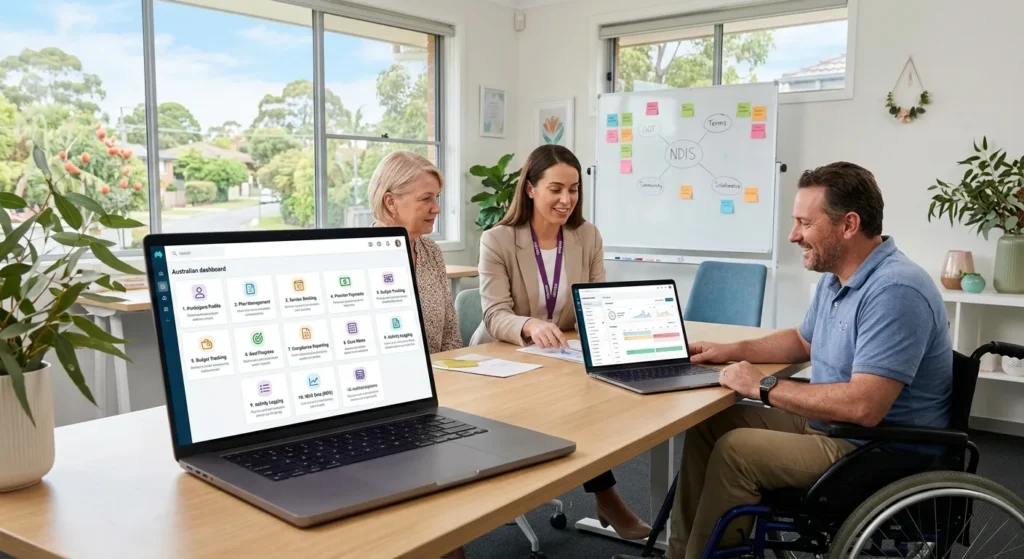
For an NDIS provider, the right software can make the difference between a smooth operation and a daily struggle with spreadsheets, scattered records and repetitive administration.
As participant numbers grow, so do the demands on staff. Rosters need updating, invoices need processing, progress information needs recording, and compliance documents must remain accurate and accessible. That is why modern NDIS software needs to do more than store information. It should connect essential workflows, reduce unnecessary administration and give providers a clearer view of their organisation.
However, not every platform offers the same capabilities. So, what should providers look for?
This guide outlines 10 essential features every modern NDIS software platform should include, from participant management and rostering to mobile apps, reporting and support coordination.
What features should NDIS software include?
Modern NDIS software should include participant management, staff rostering, invoicing, progress reporting, compliance support, support coordination, secure communication, mobile access, workflow automation and business reporting. The strongest platforms bring these functions together so providers can manage services from one central system.
If you’re comparing platforms, our guide to choosing NDIS software in Australia provides additional guidance on assessing features, security, scalability and support.
Key Takeaways
- ✓ The best NDIS software connects multiple operational functions in one platform.
- ✓ Participant management should provide a reliable central record for each person receiving support.
- ✓ Rostering and invoicing should reduce repetitive administrative work.
- ✓ Reporting and progress tracking should turn operational information into useful insights.
- ✓ Mobile apps can keep staff, participants and families connected outside the office.
✓ Security, permissions and reliable data handling should be treated as essential requirements, not optional extras.
1. NDIS Client Management Software
Participant information sits at the heart of every disability service organisation. Modern NDIS client management software should give authorised staff a central location for participant profiles, goals, support information, documents, notes and communication records.
A centralised system reduces duplicate data entry and makes it easier for relevant team members to access current information. It can also support continuity when multiple workers or coordinators are involved in a participant’s services.
When assessing this feature, look for straightforward record management, role-based access, document storage and clear participant histories.
2. NDIS Rostering Software
Creating staff rosters manually can become difficult as participant numbers and workforce requirements increase. A strong NDIS rostering software solution should make it easier to match workers with shifts, manage availability and respond to changes.
Useful capabilities include recurring shifts, staff availability, leave management, shift allocation and notifications.
The goal is simple: reduce scheduling friction while helping providers deliver consistent support.
What does NDIS rostering software do?
NDIS rostering software helps providers schedule support workers, manage availability, allocate shifts, reduce scheduling conflicts and keep workforce information organised.
3. NDIS Invoicing Software
Billing can consume significant administrative time when invoices are prepared manually or information has to be transferred between systems.
NDIS invoicing software can streamline billing workflows by connecting service information with invoicing and claims processes. Providers should look for accurate record keeping, automated invoice generation, claim tracking and financial reporting.
The benefit extends beyond saving time. Fewer manual steps can also reduce the risk of inconsistent information entering the billing process.
4. NDIS Progress Reporting
Progress information provides an important record of the support delivered and the participant’s journey towards their goals. Modern software should make recording and retrieving this information straightforward.
Effective NDIS progress reporting can help providers organise progress notes, monitor participant outcomes and prepare relevant reports without relying on disconnected documents.
Look for reporting tools that allow authorised users to generate useful information without spending hours manually compiling data.
5. NDIS Support Coordination
Support coordination involves communication, planning, service connections and ongoing participant support. Managing these responsibilities across emails, spreadsheets and separate files can create unnecessary administrative pressure.
An integrated NDIS support coordination capability can help coordinators maintain participant information, track interactions, manage tasks and keep relevant records together.
For organisations providing support coordination, this can create a clearer workflow while helping teams stay across participant requirements.
6. Staff and Companion App
NDIS work does not happen solely behind a desk. Support workers frequently operate in participants’ homes, community settings and other locations.
A staff and companion app can give workers access to relevant schedules, participant information, tasks, notes and updates while they are on the move.
Mobile access can reduce delays between service delivery and administration. Instead of waiting until a worker returns to the office, important information can be recorded closer to the time it occurs.
7. Client and Family App
Communication is equally important from the participant and family perspective.
A client and family app can provide a convenient channel for accessing schedules, updates, information and other relevant service details. This gives participants and families greater visibility while reducing reliance on repeated phone calls and emails.
For providers, better communication can support transparency and help create a more connected service experience.
8. Centralised NDIS Management
The strongest platforms do not operate as a collection of isolated tools. They connect participant management, workforce coordination, billing, reporting and communication within a single environment.
That is where NDIS management software becomes particularly valuable.
A central system can reduce duplicated data entry, improve information consistency and give authorised users a clearer picture of daily operations. It also means teams spend less time switching between applications.
9. Reporting and Business Dashboards
Good software should not simply collect data. It should help providers understand it.
Business dashboards can bring together information relating to participants, staff, services, financial activity and operational performance. This gives managers a stronger basis for identifying trends, reviewing workloads and planning resources.
For example, a provider might use reporting to identify recurring scheduling issues, monitor service activity or assess whether administrative processes are creating unnecessary delays.
The right reporting capability turns everyday operational data into information that can support better decisions.
10. Security, Permissions and Compliance Support
NDIS providers handle sensitive participant and organisational information, so security should be a fundamental software requirement.
Look for features such as role-based permissions, secure authentication, controlled access and activity records. Providers should also understand how information is stored, backed up and protected.
Compliance support is equally important. Software should help organisations maintain accurate records and organise relevant documentation rather than leaving critical information scattered across files and emails.
What is the most important NDIS software feature?
There is no single feature that suits every provider. However, participant management, security, compliance, rostering, invoicing and reporting are core capabilities for most organisations. The right combination depends on the provider’s services, workforce and operational requirements.
What Should You Look for When Comparing NDIS Software?
A useful way to assess platforms is to divide features into three groups:
| Priority | Features |
|---|---|
| Essential | Client management, security, compliance, rostering, invoicing |
| Operational | Progress reporting, support coordination, dashboards, mobile access |
| Engagement | Staff app, client and family app, notifications and communication tools |
Before choosing a platform, consider whether these features work together rather than simply checking whether they appear on a feature list.
For a broader comparison framework, read What Is NDIS Software and How Does It Help Providers?.
How These 10 Features Work Together?
The real value of modern NDIS software comes from integration.
For example, a participant’s information can feed into service planning, which connects with rostering. A completed service can then support progress documentation and invoicing, while reporting tools provide management with a broader operational view.
This connected workflow reduces the need to enter the same information repeatedly and helps teams work from more consistent records.
FAQs
What is the most important feature in NDIS software?
Participant management is a core feature because it provides the central record around which many other provider activities operate. However, security, compliance, rostering, invoicing and reporting are also essential considerations.
Is NDIS software useful for small providers?
Yes. Smaller providers can benefit from reduced administration, centralised records and clearer workflows. A scalable platform can also support growth without requiring an immediate system change.
Does NDIS software include rostering and invoicing?
Many modern platforms combine rostering and invoicing with participant management, reporting and other functions. Providers should check exactly which capabilities are included before selecting a system.
Why do NDIS providers need mobile apps?
Mobile apps can help support workers access schedules, record information and stay connected while working away from the office. Client and family apps can also improve communication with participants and their families.
How can NDIS software support compliance?
Software can help providers organise records, manage permissions, maintain documentation and create an auditable record of relevant activities. However, software does not replace the provider’s responsibility to understand and meet applicable NDIS requirements.
Conclusion
The right NDIS software should make daily work simpler, not add another layer of complexity. From NDIS client management software and rostering to invoicing, progress reporting, support coordination and mobile communication, the most useful platforms connect essential functions within one reliable environment.
Providers should therefore look beyond individual features and assess how the complete system supports their people, participants and operational goals.
Nightingale Software brings these capabilities together to help Australian NDIS providers manage services, staff, participant information and administration more efficiently. Contact Us to learn how Nightingale Software can support your organisation with practical digital tools built around the needs of modern NDIS providers.