Why More Providers Are Moving to Cloud-Based NDIS Software?
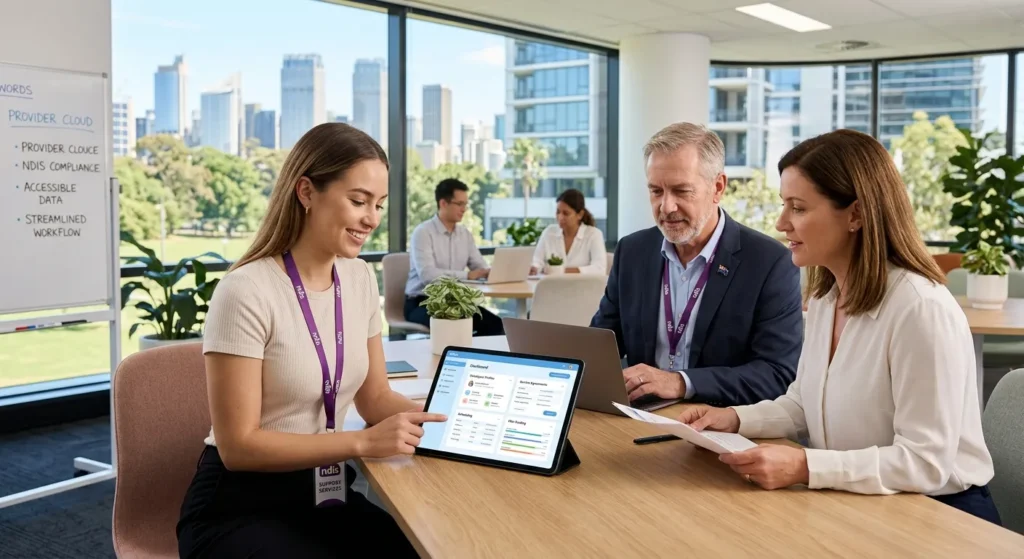
For many NDIS providers, the office is no longer the centre of every operation. Support workers are visiting participants in their homes and communities, coordinators are managing services remotely, and managers need access to accurate information without waiting for someone to return to the office.
That shift has changed what providers expect from their technology.
Traditional desktop systems and disconnected spreadsheets can make it difficult to keep participant records current, coordinate staff, process invoices and monitor service delivery. In contrast, cloud-based NDIS software gives authorised users access to connected information and workflows from wherever they are working.
The move is not simply about convenience. It is about creating a more flexible operating model that can support growing teams, mobile workforces and increasingly digital service delivery.
So, why are more NDIS providers considering cloud-based systems, and what should they look for before making the switch?
Why are NDIS providers moving to cloud-based software?
NDIS providers are moving to cloud-based software because it allows authorised teams to access information remotely, connect operational workflows, reduce manual administration, support mobile workforces and scale more easily. A well-designed cloud platform can bring participant management, rostering, invoicing, reporting and communication into one central environment.
Key Takeaways
- ✓ Cloud-based NDIS software supports secure access from multiple locations.
- ✓ Centralised data can reduce duplicate administration and disconnected records.
- ✓ Mobile access is particularly valuable for community-based support workers.
- ✓ Cloud platforms can make software updates and system maintenance simpler.
- ✓ Security remains critical because NDIS providers manage sensitive information.
- ✓ The right platform should connect NDIS management software, rostering, invoicing, reporting and communication rather than simply moving existing paperwork online.
If you are currently comparing systems, our guide to choosing NDIS software in Australia covers the key factors to assess before making a decision
What Is Cloud-Based NDIS Software?
Cloud-based NDIS software is hosted on remote servers and accessed through an internet connection rather than being installed and operated solely on individual office computers.
This means authorised users can access the system from different locations, depending on the platform’s permissions and security controls.
For an NDIS provider, that could mean:
- An administrator updating participant records from the office
- A support worker accessing relevant information from a mobile device
- A coordinator reviewing service information while working remotely
- A manager checking operational reports without being tied to one computer
The important point is that cloud technology connects people to the system without requiring the organisation to maintain the entire software environment on local hardware.
For a broader explanation of NDIS software and its role in provider operations, read What Is NDIS Software and How Does It Help Providers?.
1. Access Information Wherever Your Team Works
One of the biggest advantages of cloud-based software is accessibility.
NDIS services often take place away from the provider’s main office. Support workers may travel between participants, coordinators may work across locations, and managers may need information while away from their desks.
A cloud-based system can give authorised users access to relevant information without requiring them to return to a particular office computer.
This can make day-to-day work more responsive, particularly when teams need to update records or check information during service delivery.
Why does it matter?
Instead of asking, “Which computer has that file?”, staff can work from a central system with controlled access.
That simple change can save time and reduce unnecessary back-and-forth.
2. Create One Central Source of Information
Managing participant information across spreadsheets, emails and individual documents can create inconsistencies.
Modern NDIS management software can bring participant records, service information, workforce details, documents and operational data into one environment.
This creates a more consistent source of information for authorised users.
The NDIS Practice Standards state that participant information should be identifiable, accurately recorded, current and confidential, with an information management system that is relevant and proportionate to the provider’s size and operations.
A centralised cloud platform can support these operational requirements by helping teams manage information systematically.
3. Support Mobile NDIS Workforces
NDIS support is frequently delivered in community settings. As a result, software needs to work beyond the traditional office environment.
A staff and companion app can give support workers access to relevant schedules, participant information, tasks and updates while they are on the move.
This can also shorten the gap between delivering a service and recording the relevant information.
For example, instead of waiting until the end of the day to update a record from an office computer, a worker may be able to complete the relevant task through an approved mobile workflow.
4. Make Staff Rostering More Flexible
Rostering becomes increasingly complicated as a provider manages more participants, support workers, shifts, availability and schedule changes.
Cloud-based NDIS rostering software allows authorised team members to manage scheduling information from a connected platform rather than relying on static spreadsheets.
A modern rostering system can help teams:
- Manage staff availability
- Allocate shifts
- Review schedules
- Handle changes
- Coordinate workers across locations
- Keep relevant staff informed
For providers with mobile teams, being able to manage rostering information from different locations can make a significant operational difference.
5. Simplify Invoicing and Claims Workflows
Financial administration can become difficult when service information and billing records sit in separate systems.
Cloud-based NDIS invoicing software can connect service information with billing workflows, reducing the need for repetitive data entry.
Instead of transferring information manually between systems, providers can use a connected environment to manage invoices, claims and financial records.
This does not simply save administrative time. It can also help reduce avoidable errors caused by copying information between disconnected documents.
6. Keep Participant Records Accessible and Current
Participant information can change regularly. Goals, services, schedules, contacts and support requirements may all need updating.
NDIS client management software gives providers a structured way to maintain these records and make relevant information available to authorised team members.
Cloud access can be particularly useful when multiple workers or coordinators contribute to a participant’s support.
Rather than relying on several versions of a document, teams can work from a central record.
7. Strengthen Progress Reporting and Operational Visibility
Managers need more than raw information. They need meaningful visibility into what is happening across the organisation.
Cloud-based NDIS progress reporting can help teams organise participant information, monitor service activity and generate reports without manually combining data from multiple sources.
Reporting dashboards can also help management identify trends and make better operational decisions.
For example, a provider may review service activity, workforce information or participant-related data to identify areas that require attention.
8. Support Remote Support Coordination
Support coordination involves ongoing communication, planning and record keeping. When coordinators work across locations, access to current information becomes especially important.
Cloud-based NDIS support coordination software can help teams manage participant information, interactions, tasks and relevant documentation from a connected environment.
This can reduce reliance on separate spreadsheets and email threads while helping coordinators keep important information organised.
9. Improve Communication With Participants and Families
The move towards cloud-based systems is not only about internal operations.
A client and family app can provide participants and families with a more convenient way to access relevant information, schedules and updates.
This can reduce dependence on repeated phone calls and emails while giving participants greater visibility into their services.
For providers, it also creates another digital channel for communication that sits alongside their core management system.
10. Make Growth Easier to Manage
A software system that works for a small provider may become restrictive as the organisation grows.
Cloud-based systems can provide a more flexible foundation for adding users, participants, services and locations, depending on the platform and its architecture.
This makes scalability an important consideration when choosing NDIS software for providers.
The goal is not simply to solve today’s administrative problems. Your technology should remain useful as your organisation changes.
Is cloud-based NDIS software better for growing providers?
Cloud-based NDIS software can be a strong option for growing providers because it supports remote access, centralised information and scalable workflows. However, providers should assess security, data handling, user permissions, support and system capabilities before choosing a platform.
Is Cloud-Based NDIS Software Secure?
Security should be one of the first questions providers ask, not an afterthought.
NDIS organisations handle sensitive participant information, so choosing a cloud platform requires careful assessment of how data is stored, accessed, protected and managed.
The Office of the Australian Information Commissioner states that organisations covered by the Australian Privacy Principles must take reasonable steps to protect personal information from misuse, interference, loss and unauthorised access, modification or disclosure. Its current guidance specifically identifies third-party providers, including cloud computing, as part of the security considerations organisations should assess.
Ask a cloud software provider:
- Where is data stored?
- What access controls are available?
- How is information encrypted?
- Are backups maintained?
- How are security incidents handled?
- Can administrators control user permissions?
- What happens to data when the contract ends?
- Can information be retrieved if the organisation changes systems?
Cloud does not automatically mean secure. The provider’s security practices, controls and contractual arrangements matter.
What Should NDIS Providers Check Before Moving to the Cloud?
Before switching systems, use this five-point checklist:
| Check | What to Assess |
|---|---|
| Accessibility | Can authorised users securely access the platform where they work? |
| Security | Are appropriate technical and organisational safeguards in place? |
| Integration | Do participant, rostering, billing and reporting workflows connect? |
| Scalability | Can the platform support future growth? |
| Support | Is reliable assistance available when your team needs it? |
The OAIC also recommends that organisations assess cloud providers’ security controls, contractual arrangements, data recovery processes, access arrangements and data retrieval or deletion procedures.
Cloud-Based NDIS Software: What Changes for Providers?
The biggest change is not simply where the software is hosted. It is how teams work.
| Traditional Approach | Cloud-Based Approach |
|---|---|
| Office-based access | Secure access from multiple locations |
| Separate spreadsheets | Centralised information |
| Manual updates | Connected workflows |
| Static records | Current shared records |
| Local maintenance | Provider-managed infrastructure |
| Limited mobile access | Designed for distributed teams |
For providers with growing teams and community-based services, that difference can have a direct impact on daily administration.
FAQs
Why are NDIS providers moving to cloud-based software?
Providers are moving to cloud-based software because it supports remote access, centralised information, mobile workforces, connected workflows and easier scalability.
Is cloud software suitable for small NDIS providers?
Yes. Small providers can benefit from centralised records, remote access and reduced administration. The key is choosing a platform that matches their current needs without creating unnecessary complexity.
Can cloud-based software support NDIS compliance?
It can support compliance-related workflows, record keeping, information management and audit preparation. However, software does not replace a provider’s responsibility to understand and meet applicable NDIS requirements.
Can support workers use cloud-based NDIS software?
Yes, where the platform provides secure mobile access or a dedicated staff application. This can allow workers to access relevant information and complete approved tasks while working in the community.
What should I ask before choosing cloud-based NDIS software?
Ask about security, data storage, access controls, backups, disaster recovery, data ownership, data retrieval, privacy obligations, customer support, integrations and scalability.
Conclusion
The shift towards cloud-based NDIS software reflects a broader change in how providers deliver and manage services. Teams are increasingly distributed, support is delivered across community settings, and organisations need accurate information without relying on a single office or collection of spreadsheets.
A well-designed cloud platform can connect NDIS management software, rostering, invoicing, client management, progress reporting, support coordination and mobile communication in one environment. More importantly, it can give providers the flexibility to build efficient workflows around the way their teams actually work.
Nightingale Software brings these capabilities together in a connected platform designed for modern Australian NDIS providers. Contact Us to learn how Nightingale Software can help your organisation simplify administration, connect your workforce and manage NDIS services with greater confidence.